

IL PATTERN E LA SUA CAPACITA’ COMUNICATIVA
I pattern sono tra gli elementi grafici più comuni e fondamentali che ogni graphic designer ha realizzato almeno una volta. Costituiscono una delle forme primarie della comunicazione visiva e sono ampiamente utilizzati nel mondo del graphic design per la loro versatilità e la loro forte capacità espressiva e comunicativa.
“Duis aute iruret dolor in prehenderit in voludptate velit esse cillum toret eu giat enerit in volptate velit esse.”
La definizione di pattern
Il termine pattern è di origine inglese e significa “disposizione”. Tuttavia, a seconda del contesto, viene utilizzato per descrivere un “disegno, modello, schema ricorrente, struttura ripetitiva”.
Nell’architettura e nel design, indica una ripetizione ordinata di forme o elementi grafici, detti motivi. Questi si ripetono all’interno di una griglia regolare e lineare secondo i principi della simmetria traslatoria e della modularità, ottenendo una composizione visivamente coerente e ritmica. I pattern possono variare da semplici geometrie ripetitive a complessi disegni intricati e decorativi. La loro natura ripetitiva li rende inoltre utili in molteplici applicazioni, aggiungendo un tocco estetico unico a qualsiasi progetto.
Osservando la realtà che ci circonda, dalle forme più semplici della natura, ci si accorge che siamo circondati da pattern. Il cervello umano è infatti abituato a questa ripetizione, che suggerisce una sensazione di ordine e armonia.
Attenzione però a non confondere il pattern con altre forme di composizione. Spesso si corre il rischio di confondere, pattern e texture.
La texture è, infatti, una proprietà fisica dei materiali, in italiano si può tradurre con trama o tessitura, e descrive tutte le tecniche che servono per dare ad un’immagine caratteristiche che ci suggeriscono sensazioni tattili. In modo più preciso dovremmo quindi parlare di visual texture.

Le diverse tipologie di pattern
Esistono svariate categorie di pattern e si differenziano per la tipologia di motivo di base e per la ripetizione e composizione dello stesso.
Classificazione per elementi compositivi
Il motivo base utilizzato per la composizione può essere di varia natura, da questa deriva una prima classificazione del pattern:
– Pattern Geometrici: Basati su forme geometriche semplici come quadrati, cerchi, triangoli e linee rette. Questi pattern sono spesso utilizzati per la loro precisione e semplicità.
– Pattern Organici: Ispirati alle forme naturali, come foglie, fiori e onde. Questi pattern tendono ad avere un aspetto più fluido e naturale.
– Pattern Astratti: Caratterizzati da forme non rappresentative e stilizzate che creano un effetto visivo interessante e moderno. Questi pattern possono essere altamente creativi e artistici.
– Pattern Figurativi: Basati su immagini riconoscibili, come animali, persone o oggetti, questi pattern raccontano una storia visiva attraverso le loro ripetizioni.
Classificazione per composizione
La principale distinzione è quella tra pattern regolari e irregolari.

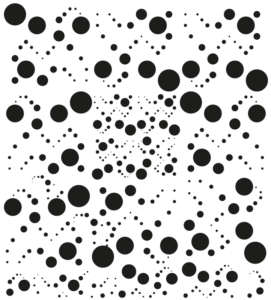
Es. Pattern Regolare Es.Pattern Irregolare
Pattern Regolari o Geometrici
Si tratta della tipologia sicuramente più vista e conosciuta, in cui il motivo di base è ripetuto un certo numero di volte secondo uno schema “prevedibile”.
Ci sono molti modi per ripetere in modo regolare un motivo, ecco perché sono diverse le tipologie di pattern regolari esistenti:
– Ripetizione a blocchi: è la tipologia più semplice e diffusa, caratterizzato dalla ripetizione regolare del motivo sia lungo l’asse verticale che orizzontale. Ampiamente utilizzata nelle tradizionali maioliche siciliane.
– Ripetizione alternata: in questo caso il motivo è ripetuto in modo regolare solo su uno dei due assi, il risultato sarà dunque una composizione in cui il motivo viene ripetuto sfalsato per metà dell’altezza del modulo.
– Ripetizione a specchio: include tutti quei pattern in cui il motivo si alterna specularmente, sia in orizzontale che in verticale.
– Ripetizione per rotazione: per un effetto più naturale e meno geometrico, in questo caso il motivo viene ripetuto dopo una rotazione di 90° o 180°, conferendo al pattern un aspetto più organico.
Pattern Irregolari
Come accennato, non esiste una regola rigida che definisca le modalità in cui un motivo debba essere ripetuto all’interno di una griglia.
Il motivo alla base di un pattern non deve necessariamente essere ripetuto in modo regolare. In alcune situazioni, infatti, il motivo ripetuto può presentare variazioni di forma, colore o dimensione, come illustrato nell’immagine sopra, pur rimanendo riconoscibile.
In altri casi, i motivi possono essere accostati in maniera organica e spontanea anziché geometrica, creando composizioni più naturali e fluide. Talvolta, non viene ripetuto l’intero motivo, ma solo gli elementi che lo compongono. Questi elementi, avendo somiglianze molto forti tra loro, conferiscono un’impressione di regolarità.
Pattern complessi
Oltre ai pattern regolari e irregolari, spesso possiamo incontrare anche una terza tipologia, che possiamo identificare come pattern complessi.
Si tratta di tutti quei casi in cui un pattern viene progettato combinando tra di loro due o più di quelle tecniche di ripetizione che abbiamo già visto. Fanno parte di questa categoria anche i pattern frutto di una ripetizione geometrica ma non lineare:
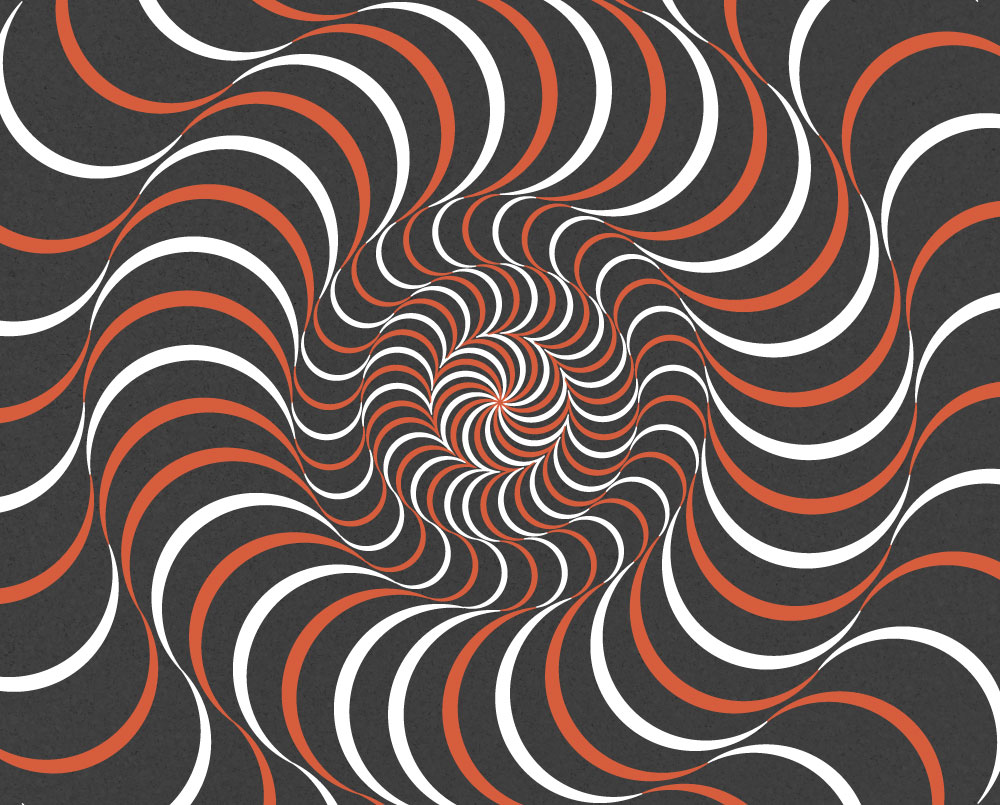
– Pattern Radiali: in cui il motivo è ripetuto in tutte le direzioni a partire da un punto centrale.
– Pattern a gradazione: in questo caso il motivo viene ripetuto in modo geometrico, ma modificandone gradualmente la dimensione,
e/o il colore.
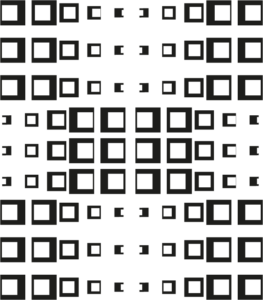
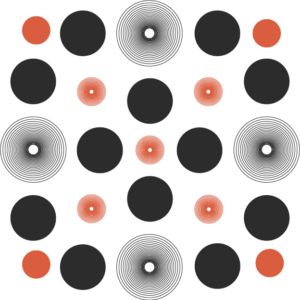
Es. Pattern a gradazione Es. Pattern radiale
Come disegnare un pattern
Creare un pattern efficace richiede una combinazione di creatività, precisione e comprensione delle tecniche di design. Ecco una guida di base su come disegnare un pattern:
1. Scegli un Tema: decidi il tipo di pattern che vuoi realizzare e il tema che vuoi rappresentare.
2. Disegna il Motivo Base: disegna l’elemento singolo che sarà ripetuto nel pattern. Questo potrebbe essere una forma geometrica, un elemento naturale, o qualsiasi altra forma utile a figurare il tema scelto.
3. Definisci la Griglia: stabilisci la griglia su cui il motivo base sarà ripetuto. Questo determinerà la struttura del tuo pattern.
4. Ripeti e Rifinisci: ripeti il motivo secondo la griglia stabilita, assicurandoti che le ripetizioni si allineino perfettamente. Apporta eventuali modifiche per migliorare la coerenza e l’estetica del pattern.
5. Colora e Testa: Applica colori e stili che migliorano il design complessivo. Testa il pattern su diverse superfici per assicurarti che mantenga la sua efficacia visiva.
Le applicazioni dei Pattern nel mondo della Grafica
I pattern sono uno strumento influente, per questo motivo vengono ampiamente utilizzati in molti campi del design e della grafica, grazie alla loro versatilità e capacità di aggiungere profondità visiva e interesse. Una volta acquisite le tecniche di progettazione di un pattern, è fondamentale comprenderne le strategie d’applicazione per sfruttare al meglio le loro qualità.
Alcune delle principali applicazioni includono:
– Branding e Identità: molti marchi utilizzano pattern distintivi per creare un’identità visiva riconoscibile e accattivante. In questi casi si sfrutta il logo, o parte di esso, come motivo base della composizione.
– Packaging: la spiccata capacità comunicativa del pattern consente la differenziazione dei prodotti e del loro packaging e al tempo stesso di crearne una continuità, nel caso di prodotti proposti in diverse varianti.
– Web Design e UI/UX: i pattern possono essere utilizzati come sfondi, texture e elementi decorativi per migliorare l’estetica e la navigabilità di siti web e applicazioni.
– Editoria: i pattern sono strumenti versatili nel design editoriale, utilizzati per migliorarne l’estetica, organizzare il contenuto e rafforzare l’identità visiva delle pubblicazioni, rendendole più attraenti e funzionali per i lettori.
– Arte Grafica e Illustrazione: artisti e illustratori utilizzano pattern per aggiungere complessità e dettagli ai loro lavori, spesso integrandoli in composizioni più ampie.
– Interior Design: i pattern sono ampiamente utilizzati in decorazioni d’interni, incluse carte da parati, tappeti e piastrelle, per creare atmosfere e temi specifici.
– Design Tessile: i pattern sono fondamentali nel design di tessuti per abbigliamento, tappezzeria e altri prodotti tessili.
In conclusione, i pattern sono strumenti potenti nel design e nella grafica, capaci di comunicare emozioni, tematiche e identità visive in modo efficace e artistico. La loro versatilità li rende indispensabili in molteplici applicazioni, contribuendo a creare opere visivamente accattivanti e funzionali.
Comments:
-
-
Mark Jonson
Qui officia deserunt mollit anim id est labrum. Duis aute iruret dolor in prehenderit in voludptate velit esse cillum toret eu giat enderit in volptate velit esse tellus eget.
-




Marcus Moor
Qui officia deserunt mollit anim id est labrum. Duis aute iruret dolor in prehenderit in voludptate velit esse cillum toret eu giat enderit in volptate velit esse tellus eget condimentum.